Discovering water where it should not be is stressful. Whether it is a burst supply line, an overflowing toilet or a flooded basement, what you do in the first hour has a big impact on how much damage you end up with.
Water spreads quickly. It wicks up drywall, soaks into carpet pad and seeps under flooring. The faster it is stopped and removed, the more of your home can be saved.
Step 1: Make Sure Everyone Is Safe
Before anything else, think about safety. Water and electricity are a dangerous mix.
- Do not walk into standing water if outlets, cords or appliances may be underwater.
- If it is safe to reach your electrical panel, turn off power to the affected area.
- Watch for sagging ceilings. A ceiling holding water can collapse.
- Keep children and pets away, especially if the water may be contaminated.
Step 2: Stop the Water
If the water is coming from inside the house, shut it off at the source. Most fixtures, like toilets and sinks, have a small shutoff valve nearby. For a burst pipe or a leak you cannot isolate, close the main water shutoff valve for the whole house.
Step 3: Figure Out What Kind of Water It Is
Not all water damage is the same:
- Clean water from a supply line, faucet or water heater is the least risky.
- Gray water from a washing machine, dishwasher or sink drain may contain contaminants.
- Contaminated water from sewer backups, toilet overflows with waste or outside floodwater can carry bacteria and should not be handled without protection.
If you suspect contaminated water, do not try to clean it up yourself. Our sewage backup cleanup crew uses protective equipment and proper disinfection.
Step 4: Document Everything
Before you move anything, take photos and video of the water, the source and the affected rooms. Pictures taken early show exactly what happened and how far the water spread.
Step 5: Protect What You Can
- Move electronics, photos, documents and other valuables to a dry area.
- Lift furniture off wet carpet and place foil or wood blocks under the legs.
- Pick up rugs and fabrics that can bleed color onto wet flooring.
Step 6: Call for Professional Help
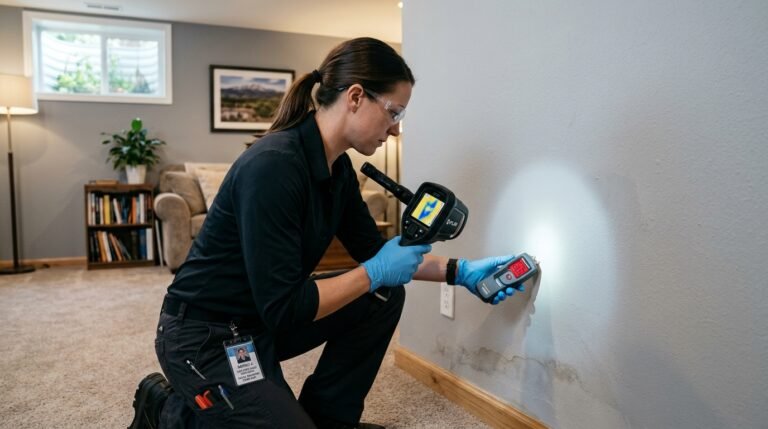
Towels and household fans cannot remove the water trapped inside walls, subfloors and insulation. Without commercial equipment, that hidden moisture can lead to warped floors, odors and mold within a day or two.
Our team starts with emergency water extraction to pull out standing water fast, then handles the drying, cleanup and repairs as part of complete water damage restoration.
What Not to Do
- Do not use a household vacuum to pick up water.
- Do not turn on ceiling fans or lights if the ceiling is wet.
- Do not wait to see if it dries on its own.
Water damage in Broomfield? Call (720) 731-0350. A real person answers 24/7 and can get a crew on the way.